Showing posts with label Salil Kumar. Show all posts

Tuesday, 14 April 2015

Mergers & Acquisitions – Brand Building 101

In the past month or so there’s been a lot of talk about different brands in the fashion industry being taken over, or merging with other companies. Although it’s not an unfamiliar occurrence in any industry, two big names have come up in the conversation so far; the first of which is Karmaloop (an online retailer specialising in street wear), and the second is Net-a-Porter (an online retailer stocking luxury womenswear).

Having recently filed for bankruptcy, many different investors have shown their interest in purchasing the cult street wear retailer Karmaloop, but it’s Kanye West’s name which has attracted the most press. Those of you who have been paying attention in the fashion-sphere will know that West has recently been collaborating with super-brand Adidas, as part of what seems to be an on-going clothing, footwear and accessories collection. The Adidas x Kanye West Season 1 show was the most viewed fashion collection of the Fall/Winter 2015 season (beating out Chanel for the first time), and was a line that was positioned at the lower end of the ready to wear market (with Yeezy Boosts only setting you back $350).

Kanye West x Adidas Collection (Source: HIphopdx)

Although the purchase of Karmaloop by Kanye West and business partner Damon Dash has yet to be confirmed, it seems like a match made in heaven as West has previously declared that he’s looking to make his brand of fashion available to the masses, and having his own shop seems like a step in the right direction.

Despite the fact that controversy follows West wherever he goes, he has an undeniable passion for fashion, and a respect for branding that may turn Karmaloop around in a short span of time. When it comes to re-branding, the options are varied, but most of the time it involves stripping all the old associations away from the brand, and building it anew. For West, this could involve bringing in his Adidas for Kanye West line as an exclusive, and then curating the stock-list to support up and coming designers, as well as a complementary list of well-known street-wear brands.

Natalie Massenet – Founder of Net-a-Porter (Source: The Australian)

Putting the sale of Karmaloop aside, Net-a-Porter has also confirmed that it’s merging with rival online retailer Yoox, which has a unisex product offering, but a slightly less ‘luxury’ positioning in the market. Given the combined sales of these two online retailers (US $1.4 billion), the merger makes great business sense, as it aims to bring about greater efficiency in the online luxury sector by grouping resources and leveraging each brand’s strengths and assets. Yoox has been known for its logistical prowess, whereas Net-a-Porter has strong industry ties, and an unmatched stock-list of the most luxury of luxury brands. As mentioned by Net-a-Porter founder, Natalie Massenet, the merger results in the formation of “the world's biggest luxury fashion store…a store that never closes, a store without geographical borders.”

It’s going to be an interesting few months ahead for the online retailing sector in the fashion industry, so for now we’ll have to issue a ‘watch this space.’

Salil Kumar
Current student in the Master of Marketing program at the University of Sydney Business School

Monday, 30 March 2015

Big Bands & Branding – What lies ahead for One Direction?

From left to right: Liam Payne, Niall Horan, Louis Tomlinson, Zayn Malik & Harry Styles (Source: Sugarscape)

In news that had teenagers all over the world gasping for air, Zayn Malik announced his departure from One Direction after spending five years as part of the chart-topping British boy band. As a low-key fan of the group (and dedicated marketer), what I was most concerned about was the impact Zayn’s departure would have on the One Direction brand going forward - especially considering it was up until now one of the most lucrative musical acts to have ever existed.

In 2013 Business Insider estimated the worth of One Direction as close to US$1 billion, with earning sources ranging from concert ticket to record sales, movie tickets, DVD sales, and a wide range of memorabilia and merchandise (including an official fragrance). Forbes also estimated that the group earned $75 million in 2014, and listed them as the 7th most powerful celebrities on social media, 17th in terms of earnings, and 44th in terms of overall press coverage.

So given all these stats, I was left wondering how the departure of one member of this group would impact the overall longevity of ‘One Direction’. If history were any indication, I would predict that like many other bands before it (Spice Girls, Take That, Boyzone etc.), One Direction are headed towards an eventual disbanding, perhaps with one last album and tour under their belts.

Part of the charm of a boy (or girl) band is the togetherness and chemistry between the members, and so to loose a vital player leaves an unforgettable void, and one that will always be referred to with scrutiny and comparison. They’ll never be just One Direction anymore – it’ll always be One Direction before/after Zayn – and this is perhaps the crux of the problem, as although the band isn’t just one person, the balance in personalities is what lies behind their success, and so it’ll be incredibly difficult to fill this void and to carry on without fans feeling like something (or someone in this case) is missing.

Aside from the overall branding concerns, the process of removing one band member from the picture may prove to be an extremely costly exercise – and one that the band may not want to repeat if another member leaves. Not only will all official merchandise need to be updated without Zayn’s signature or face on it, so will the external licensing deals that have proved to be cash cow’s for the band, and will now need to either be renewed, or changed to account for Zayn’s departure.

I would compare this whole situation to someone losing an arm or leg (as graphic as that comparison is), because at the end of the day you can still function to some degree, but your movements will always be limited, and that’s something One Direction will no doubt experience in the years (or months) to come.

Salil Kumar
Current student in the Master of Marketing program at the University of Sydney Business School

Monday, 23 March 2015

Dolce & Gabbana and The PR Disaster

The last week in the fashion industry has definitely been an interesting one, but what topped the conversation was an interview given by Domenico Dolce and Stefano Gabbana (obviously of Dolce & Gabbana), where they questioned non-traditional family sets, and were quoted saying the following: "I call children of chemistry ‘synthetic children.’"

Although this article fell fairly under the radar at first, it wasn’t until it came into Elton John’s notice that their words began to be picked apart, especially by John himself who posted a very passionate response to the interview on Instagram, defending both his children (who were born of IVF) and family values.

What I wanted to really focus on in this post was how D&G responded to John’s call for people to #boycottdolcegabbana, and whether it was the smartest move given the size and mass-market awareness of the Dolce & Gabbana brand. I personally would have thought the designer duo would have kept quiet, and then issued one statement in which they laid the issue to rest (similar to what Beyonce’s PR team did following elevator gate last year). Instead, what they’ve done is essentially add fuel to the fire by reposting messages of support, or the thoughts and conversation of those who have been marred by their words, on their personal social media accounts (Fashionista.com counted almost 50 instagram posts addressing the topic on their respective pages).

Although I’m no PR expert, from a branding perspective taking a very defensive approach, and drawing out the issue seems very counterproductive. Once the damage was done, they should have just reached out to John and apologised for the misunderstanding (they later regretted their choice words, and clarified their acceptance of all family sets). What they’ve instead done is made people question the values of their brand, and potentially alienated key customer sets who are from or support non-traditional families, or have had children via IVF.

It’ll be interesting to see how this whole debacle affects D&G sales over the next 6 months, but D&G definitely have their work cut out for them in resolving the dissent their words have caused, and re-building positive associations surrounding their brand.

Salil Kumar
Current student in the Master of Marketing program at the University of Sydney Business School

Monday, 16 March 2015

The Whole Truth – Personal Brand Building 101

As of the last week, social media has been abuzz following claims that Belle Gibson, founder of The Whole Pantry health and well-being app, may have lied about suffering from a terminal cancer. The context of these allegations is that she’s essentially built a brand out of her personal health journey, and documenting her battle with this illness.

I don’t want to focus on the validity of these claims – that’s Belle’s story to tell, and it’s not productive to speculate on what is essentially a rumour at this point in time. I do however want to draw upon the undeniable power of personal story telling, and how it can both build and completely ruin a brand.

Perhaps the best example of this scenario is that of Lance Armstrong – a cancer survivor and seven time Tour De France title holder who was found out to have been using performance engaging drugs during the span of his cycling career. Lance’s battle with cancer and eventual comeback was a heroic tale of sheer determination and a fight against all odds. This story became the backbone of his brand, and later formed the basis of his sponsorship deals with Nike, Michelob, Trek Bicycles, Easton-Bell Giro Helmets, Honey Stinger and Lance Armstrong branded 24-Hour Fitness gyms. These brands bought into the athleticism of Lance Armstrong, so when it emerged that drugs may have aided his success, his brand story fell through and so did his various sponsorship deals.

Cyclist Lance Armstrong (Source: Esquire)

Where Armstrong’s situation differs from a fellow sportsman such as Tiger Woods (who faced a highly publicised cheating scandal back in 2009), is that Wood’s sportsmanship never came into question – he may have cheated on his wife, but he didn’t cheat in the game, which is why key sponsors such as Nike stood by him throughout the scandal.

So when it comes to personal branding, the key takeaway from these situations is that your brand story (and values) are essentially what consumers/followers/admirers are buying into. When any part of this story starts to fall through, so does the trust people instil in your brand; so always tell the whole truth!

Salil Kumar
Current student in the Master of Marketing program at the University of Sydney Business School

Wednesday, 11 March 2015

THE Dress & Leveraging Viral News Stories

You’d have to be living under a rock if you haven’t heard about ‘the dress’, because from now onwards any talk about the colour combinations ‘black and blue’ and ‘white and gold’ will always whittle back to this one item of clothing. To catch you up, a picture of a seemingly plain dress went viral last week after sparking heated debate on Tumblr (not a hard feat to achieve) about its colour. A range of scientists, celebrities and ordinary people have weighed in, and it seems that there is still a significant divide between the people who see it as a white and gold dress, as opposed to those who see it as clearly black and blue.

Now we won’t get into the scientific details of this dilemma, but instead I wanted to focus on how brands have bought into the hype of this debate. Although most brands have taken the tongue in cheek approach of questioning the colour of their products (L’Oreal put their gold and blue eye shadows head to head), only one has really used this debate to spark a much greater one about domestic abuse. Playing off the connotations of ‘black and blue’, the South African arm of The Salvation Army (TSA) put out a campaign featuring the dress in question (see below), and instantaneously had us questioning our willingness to talk about something so trivial, in lieu of discussing real social issues.


TSA Campaign Image One (Source: SMH)


TSA Campaign Image Two (Source: SMH)

I think there will always be a camp of people that will find brands leveraging off viral news stories as a fickle way to gain engagement, and although it is, I do believe that the means justify the ends in this case. TSA has created a really compelling message out of this previously trivial issue, and although the imagery is confronting, it probably needed to be to really get the message across. The dress in this instance becomes the prop to the overall campaign, and in doing so it became less about the dress, and more about the issue and it’s relevance to society (they quoted that 1 in 6 women are victims of domestic abuse).

This isn’t the first campaign of its kind, but it was a welcome one amidst all the tired jokes and internet-memes surrounding ‘the dress.’ Hopefully other brands will take a page from TSA’s books and leverage viral stories in a more socially responsible manner – there will always be an opportunity to talk about your products, but to impart an important social message leaves a much more lasting impression.

Salil Kumar
Current student in the Master of Marketing program at the University of Sydney Business School

Monday, 2 March 2015

Google Targets the Collaborative Economy

The term ‘collaborative economy’ has been floating around a lot in the past few years, with companies such as Airbnb & Uber transforming their respective industries by providing services as you need them, and through much more efficient (and usually cheaper) means. For those of you unaware of this term, it basically refers to an economic model within which people obtain goods and services from their peers – ranging from food, money, accommodation, transport and basically any (reasonable) good or service they may require.

Although Airbnb, Uber and oDesk have been at the forefront of the collaborative economy, it seems that Google is now gearing up to join them and will play a major role in this market going forward. Not only is the technology giant literally joining them (Google initially invested $258 million in Uber and is partnered with Airbnb), it’s also developing it’s own offerings to rival these businesses, and to provide solutions to other consumer problems that are better met within a collaborative market.

The most intriguing venture that Google has taken on is the ‘Google Self-Driving Car’ project, which as the name suggests, involves developing autonomous cars. Where this really hits home from a marketing perspective is how it’ll change consumer purchase behaviour within practically every industry imaginable. The automotive market is perhaps the first, with there most likely being a turnaround in car ownership as people begin to share or rent cars when they need them, as opposed to owning them outright. Other industries that may also see a complete turnaround are the fast-food, clothing, and grocery industries, with people becoming even less inclined to actually go and shop in person, and instead order and have good and services delivered to their homes.

The Google Self-Driving Car Prototype (Source: BBC UK)

It’ll probably be another 5-10 years before the Google Self-Driving Car and other technologies in this market really come into play, but it’s eye-opening how many industries are likely to be overhauled by the collaborative economy. What this does suggest is that in many cases, we as people are better able to meet each others needs by sharing and collaborating, instead of relying solely on third party sources. Although the collaborative economy won’t be the answer to all our problems, it does seem to address some, and is doing a pretty good job of it too.  

To read more about Google’s recent investments in the Collaborative Economy, visit the Web-Strategist blog.

By Salil Kumar
Current student in the Master of Marketing program at the University of Sydney Business School

Wednesday, 25 February 2015

Virtual Reality hits New York Fashion Week

It’s that time of the year again when the fashion pack jet off for a month of Fall/Winter shows across the world’s most fashionable cities. With the first stop being New York Fashion Week, I was hoping to have some innovative branding efforts to report on, and was not disappointed when I came across the news that designer Rebecca Minkoff had filmed her Fall 2015 collection in preparation for releasing it later using virtual reality technology.

For those of you who may be unaware of term Virtual Reality (or VR as it’s slowly becoming to be known), it’s probably worth reading this post published by The Verge on this topic. But to give you a brief overview, it pretty much involves the use of ‘goggle’ like devices, which when you put them on, immerses you into a 360-degree, 3D experience. It’s being touted to revolutionise the gaming industry in particular, but also bring about greater efficiencies in other industries including real estate (gone are the days that you need to trudge between one property to the next), education, tourism and pornography (but lets not go there).

Virtual Reality Oculus Rift Device (Source: Inition UK)

Getting back to the topic of VR entering the fashion world, as much as it sounds like a completely new concept, the fashion world has always been ahead of the curve in broadcasting shows and experiences on digital platforms. Burberry was notably one of the first brands to live stream their fashion shows on their website and within their flagship stores around the world. VR therefore seems like a natural extension to these existing efforts, instead allowing fans and customers of the brand to take an actual (well virtual) seat on the front row, and experience the show first hand within their living rooms.

It was only halfway through writing this post did I realise that this wasn’t actually the first time that the fashion world had engaged with VR technology. It turns out that this time last year, high street retailer, Topshop, engaged production company, Inition, to create a VR experience for customers at their flagship store on Oxford Street. The result was a VR booth that allowed customers to virtually attend the Topshop Unique show at London Fashion Week, in between shopping at the retailer’s store.


No only did the venture win Inition the ‘BT Retail Project of the Year 2014’, it also created a lot of press for the brand, and engaged Topshop consumers in a way that had never been done before.

Now that it seems that VR will become a commonplace experience within the fashion industry, I’m excited to see how many brands will embrace this new technology, and whether it will lead to greater change within the industry. After all, if you can attend a show from virtually anywhere, what’s the point of inviting hundreds of members of the press, and holding a show in the first place? Although it’s probably not something we need to concern ourselves with for the time being, it’s still worth noting the power of this new technology, and the opportunities it may present brands in the years to come.

To read more about Topshop’s VR project, visit Inition’s Case Study.

Salil Kumar
Current student in the Master of Marketing program at the University of Sydney Business School

Monday, 23 February 2015

The Oscars 2015 – The Superbowl of Product Placement

There’s been a lot of talk in the media recently about the goodie bags that this year’s Oscar nominees are taking away. The estimated worth of each individual bag has ranged at around US$125,000, and allegedly include a range of absurdly expensive luxury personal products, accessories, pre-paid holidays and even a year’s worth of Audi car rental.

Although the bags are not officially endorsed by the Academy, they have remained a part of the annual awards function for many years, and seem to continuously be growing in value. The main reason I wanted to bring them up was that it seems that the Oscars has become as much of a marketing event as the Superbowl. Whereas marketers around the world anticipate viewing the highly publicised ad breaks, it seems that a similar situation is arising within the Oscars, but instead the focus is on product placement within the actual show it self.

The Infamous Oscar’s Selfie taken with a Samsung Galaxy Phone (Source: Tech First Post)

Last year’s function is perhaps the best example of this, with Samsung negotiating the use of it’s Galaxy phones within the actual broadcast of the show, in addition to buying out several ad spots. Perhaps the most memorable moment for the brand (and everyone else who was watching that year) was when host Ellen DeGeneres whipped out the Samsung Galaxy for a seemingly impromptu group ‘selfie’. She then tweeted the picture, which quickly became the most retweeted Tweet of all time, and within 12 hours had amassed around 32.8 million impressions, was seen by 8.1 million people, and was retweeted 2.4 million times (and a year later it currently stands at 3.36 million).

Although it’s unlikely for such a moment to repeat itself within this year’s broadcast, it does leave room for thought as to how brands can continue to make their presence known within one of Hollywood’s most talked about award nights. Many brands do participate on the side-lines by sharing Oscar related commentary on their social media platforms, yet it’s probably quite difficult to actually demand a physical presence at the function without sponsoring the use of their products by celebrity attendees, or like many have done already, offering up freebies to feature in the nominee goodie bags.

As always, my focus will probably remain on the red carpet side of the awards show, but I do look forward to seeing the marketing buzz around the event, and spotting this year’s most visible product placements.

Salil Kumar
Current student in the Master of Marketing program at the University of Sydney Business School

Friday, 13 February 2015

Breaking the Internet with Kim Kardashian West

Kim Kardashian West – GQ Women of the Year 2014 (Source: Huffington Post)

This post has been a long time coming, and I could have chosen to write it back when Kim Kardashian West first ‘broke the Internet’ with her now infamous Paper magazine cover, but I wanted to wait until some of the stats rolled in, and to collect my thoughts on what I dub the era of ‘Kardashian Kulture’.

Kimberley Noel Kardashian West, or Kim Kardashian as she’s come to be known, has been metaphorically breaking the Internet since her debut in mainstream pop culture back in 2007. Given this is a university blog, I won’t go into the exact source of her rise to fame (Google it), but ever since then she’s been working her way to becoming one of the most marketable celebrity brands in the world.

A business model that essentially began from collecting fees for club appearances and product plugs, has now grown to encompass a beauty empire, clothing and handbag line, multiple fragrance deals, high fashion campaign features, and nine seasons of the hit reality TV series, Keeping Up With The Kardashians (and that’s not counting the multiple spin offs). Say whatever you want about Kardashian West, but its undisputable that she understands how to sell her brand, and has a penchant for keeping herself relevant (whether you agree with her methods or not).

Now before we go any further, let’s contextualize Kim’s social media reach and consider that she’s the most followed celebrity on Instagram with 25.8 million followers, has 26.8 million followers on Twitter, and 25.3 million likes on Facebook. She still holds the title of the most liked photo on Instagram (a picture from her wedding to rapper Kanye West in May 2014), was the second most searched person on Google last year, and launched one of the most commercially successful mobile video games of 2014 (Kim Kardashian: Hollywood netted $74.3 million in revenue for the game’s developer Glu Mobile).

So given these credentials, and ignoring the argument that she’s ‘famous for nothing’, I can clearly see why some of the world’s most coveted brands want to work with her. Anna Wintour (Editor in Chief of American Vogue), for example, had allegedly banned Kardashian West from attending the annual Vogue hosted Met Ball until 2013, when she not only attended with then fiancé Kanye West, but later went on to score a cover of American Vogue, and now a solo cover of the Australian edition. Kim’s American Vogue issue went on to sell 250,000 copies (20% more than the previous month’s Rihanna fronted issue), and paved the way for further high fashion jobs including an ad campaign for luxury fashion house Balmain, the controversial Paper magazine cover (which resulted in 5 million unique hits to the magazine’s website in just one day), and further covers of CR Fashion Book (run by former French Vogue Editor in Chief, Carine Roitfeld), and Love Magazine (which is rolling out as I write this article).

I had originally intended to focus this post on the ‘re-branding’ of Kim Kardashian West, but after much thought I couldn’t commit to discussing the strategy behind a brand that continues to shift, shock and polarize the public (well, perhaps that’s the strategy after all). What I can say is that her brand is deeply embedded in popular culture; anything she does - ranging from cropping her daughter out of a photo, to cutting her hair - gets reported by every news outlet, and this insane level of conversation is what brands are buying into.

Sign Kim Kardashian West, and she’ll break the Internet for you.

Salil Kumar
Current student in the Master of Marketing program at the University of Sydney Business School

Monday, 9 February 2015

50 Shades of Grey - A Valentine’s Day Cash Cow

(Source: 50 Shades of Grey YouTube Channel)

You’d have to be living under a rock if you haven’t heard of the 50 Shades of Grey (5SOG) series, read it yourself, or at least observed the thousands of commuters that were unashamedly reading it on public transport back in 2012. I for one have read but a page of one of the books (out of sheer curiosity), and don’t intend to read any more pages, or see the movie. But in an effort to remain completely transparent in writing this post, I will say that I personally don’t see the appeal of this series, and perhaps that may be due to the fact that I’m not the intended audience. Whatever it is, I can’t deny that it is a commercial success (book sales reached 100 million units this time last year), and that come Valentines Day 2015, the movie will no doubt dominate box offices around the world.

Now from a marketing perspective (because that’s what we’re here to talk about), what I find interesting about the movie’s release is the advertising opportunity it provides to certain industries (namely condom manufacturers, speciality sex shops and the lingerie market). Ordinarily these industries would target adult only events (club nights, festivals or trade shows) or more boutique gatherings, but nothing comes close to the scale of operation that the 5SOG film brings to the table. Putting aside the obvious restrictions that brands in this domain have in promoting their product to the public, there’s nothing really stopping them from cashing in on the hype (but not obviously the IP) surrounding the release of the film on February 12.

Just before Valentines Day, February 12 provides the perfect contextual background for the release, as well as official (and non-official) branding tie-ins. Already several condom manufacturers have keyed in with parodies of the 5SOG series; an E.L. James (author of the book) approved adult toy line is available for purchase; cinemas around the world are curating special viewing experiences; and a slew of hotels have also checked in with 5SOG themed packages.

Whether you’re a fan of the series or not, it’s sure to be at the front of all media and advertising agendas this Valentines Day, and so as the old adage goes, if you can’t beat them, join them (but don’t expect to see me at a cinema near you).

Salil Kumar
Current student in the Master of Marketing program at the University of Sydney Business School

Monday, 2 February 2015

When Rihanna Met Puma – The New Age of Celebrity Collaborations

(Source: BBC UK)

In what is now old news, Rihanna has signed on as Creative Director for the womenswear line at Puma. I’ve been meaning to talk about this for a while now, and not just for an excuse to feature the polarising singer herself, but to look at the implications of giving creative control of a brand to a celebrity. In what seems to be an on-going trend these days, celebrity endorsements have given way to celebrity collaborations, and with this Puma deal, celebrities are now taking on leadership roles within organisations.

Perhaps where we should start is to look at the difference between being an ambassador of a brand (wearing the clothes), and taking on a role as creative director (designing the clothes). The problem with the distinction between these two roles is that one has a greater degree of corporate accountability than the other – you can no doubt change who represents the brand overnight, but removing the association of a creative director is much more difficult as they are essentially an employee. Furthermore, the role of a creative director (in a branding context) is to lead the brand’s vision, whereas an ambassador is solely a reflection of this vision.

Now having dealt with some of the technicalities regarding these positions, I personally feel that Puma has made a really smart decision to sign on Rihanna as a Creative Director. The chart-topping singer has proven her design skills in previous collaborations with brands such as River Island and MAC Cosmetics, as well as her ability to sell whatever she puts her name to (the Riri Woo lipstick for MAC Cosmetics sold out within three hours of going on sale). She also has a stamp of approval from fashion figurehead Anna Wintour, who last year acknowledged her contribution to the industry, and awarded her the CFDA (Council of Fashion Designers of America) Style Icon Award.

So although there may have been speculation at the time that Puma could have instead hired a trained designer to fill this role, what they get with Rihanna is a minted tastemaker, and one with a phenomenal fan following (90 million likes on Facebook, 40 million Twitter followers, and 14.6 million followers on Instagram) and credibility within the fashion circle. It’s probably too early to say whether Puma have a potential hit on their hands, but considering Rihanna’s background, making hits is no new feat, and so I’m looking forward to seeing her impact on this brand in the months to come.

To read more about Rihanna’s new role, visit Puma’s press page.

Salil Kumar
Current student in the Master of Marketing program at the University of Sydney Business School

Wednesday, 28 January 2015

A New Era at Gucci – New CEO & Creative Director Lead Re-brand

In the fashion world change is always imminent, and on most occasions required, in order to set new trends, push editorial boundaries and keep a brand relevant. But what I’ve always found most interesting about the industry is how re-branding works in particular, in the sense that when a new designer takes over the role as Creative Director for a brand, they have an opportunity to tell new stories, to alter the vision of the brand and re-invent the pieces that the brand is well known for.

Frida Giannini and Patrizio di Marco (Source: Fastcodesign)

So in hearing that Gucci’s CEO, Patrizio di Marco, and Creative Director, Frida Giannini, were leaving the company, I couldn’t help but feel apprehensive about the future of the brand. A few years back a similar situation took place at Yves Saint Laurent (which has now been rebranded as Saint Laurent Paris), where new Creative Director Hedi Slimane took the opportunity to completely overhaul the stagnant fashion house. At the time, the changes were met with trepidation, but as a few seasons have gone by, many in the industry (myself included) have come to accept and understand the evolution of the brand into a more relevant and perhaps more contemporary offering. It still embodies the elements of luxury that Yves Saint Laurent became known for, but the tone and styling is much more attuned to the millennial customer than before. This is a move that clearly paid off, as within 18 months of the re-brand, the Huffington Post reported a 40% increase in the brand’s overall retail sales, and that many items had sold out within days of the new collections hitting stores.

So although we’ll have to wait and see whether a successful re-branding can be achieved at Gucci, it seems that things are off to a good start. Despite both figureheads departing the company much earlier than expected (most in the industry were under the impression that last week’s Mens collection and the impending Womenswear collection were to be Giannini’s last), Gucci was quick to announce Giannini’s successor, Alessandro Michele (former Head of Accessories), who reportedly reworked the entire mens collection within a span of just 5 days. The re-worked show was clearly a strategic effort on Michele’s part, as the company’s new CEO mentioned in an interview that ‘[Michele] and I are fully aligned on this new contemporary vision needed by the brand and we will be continuously inspired by that new identity in our respective roles and duties.’

Gucci’s New Creative Director, Alessandro Michele (Source: Wall Street Journal)

As I’ve spoken about in the past, the evolution of brands in the luxury sector often involves re-invention, from the clothes down to the brand story. By shifting the creative focus of a fashion brand, you have an opportunity to take a completely new direction, and like with Yves Saint Laurent, address a new customer set and point of view. Although there is always a risk of alienating existing customers and followers of the brand, most people in the industry understand the need for change, and like myself, anticipate it when a brand loses the level of awareness it once had.

I for one will be keeping a close eye on Gucci throughout 2015, and look forward to seeing the changes that the iconic brand will make to realise its new vision.

Salil Kumar
Current student in the Master of Marketing program at the University of Sydney Business School

Tuesday, 20 January 2015

A Coup for Diversity – Tiffany & Co. Feature Same Sex Couple in New Ad

(Source: Time.com)

For an ad that has recently been on high rotation on the interwebs, it seems that Tiffany & Co. have hit the right mark by featuring a real same sex couple as part of their recent ad campaign for Tiffany engagement rings. Although it’s a little unfortunate that in this day and age we’re surprised when brands engage (pun fully intended) with the LGBT community (or any other minority), it’s still a moment worth celebrating - especially when it’s a first for the brand itself, as well as the overall fine jewellery industry.

Without segueing into a social equity discussion, I just wanted to visit a few points from a brand strategy angle that this ad brings to the table. The most obvious point to make here is that Tiffany & Co. are finally addressing an existing market niche. With marriage equality spreading through most nations, same sex couples, like everyone else, need engagement rings and are likely to purchase them from the iconic brand. By representing this market in a more visible manner, Tiffany & Co. are sending an overarching message of acceptance and inclusion – that their products are suitable for people from all walks of life, regardless of gender, race or sexuality. As mentioned by a Tiffany & Co. spokesperson, ‘Nowadays, the road to marriage is no longer linear, and true love can happen more than once with love stories coming in a variety of forms’. This is a powerful brand message, and one that is only made believable through an equally powerful visual campaign.

The second point worth mentioning is that from an internal marketing perspective, Tiffany & Co. are also addressing any pro LGBT employment policies that they may have in place. It’s one thing to say you don’t discriminate against the LGBT community, but to then represent them on this scale creates a cohesive brand message – one that employees are expected to internalise, and reflect in the way they treat each other and Tiffany & Co.’s customers. Although it goes without saying that same sex couples should receive the same level of service as other customers, the ad campaign works to further normalise the event of a same sex couple visiting Tiffany & Co. for engagement rings, or shopping together for any other jewellery item.

On a final note, I can’t not mention that a campaign such as this one was bound to create a bit of controversy and bring with it free press for the brand. Although I applaud the fact that Tiffany & Co. came up with this concept and executed it so perfectly, I do also hope that it wasn’t a flash in the pan, and is followed up by a consistent array of brand messaging and imagery that continues to engage with the LGBT community, and other minorities not adequately represented by brands in this industry.

To see the full campaign image, visit Tiffany & Co. 

Salil Kumar
Current student in the Master of Marketing program at the University of Sydney Business School

Wednesday, 14 January 2015

The Kingsman Collection – A Fashion & Film First

Official film merchandising is no new concept, and especially for films with pre-existing fan communities (think Twilight and Harry Potter), or the potential to create new ones (Frozen anyone?). However, the scale of these merchandising agreements is usually quite large, and results in items that are often affordable for the average filmgoer. For this reason alone, upon hearing that Mr Porter (brother of online retailer, Net-A-Porter) was co-producing a luxury menswear line with the costume designer from upcoming release, Kingsman: The Secret Service, I was genuinely surprised that such a collaboration was to take place.


For a little backstory on Mr Porter, the online retailer has been curating and selling high-end menswear items since 2011, and now stocks more than 200 of the world’s leading brands. In addition to this, it has a total of 1.6 million monthly unique visitors, and offers worldwide express shipping to 170 countries. Having ordered from this site on numerous occasions, I can personally vouch for the fact that it is without doubt the most premium online shopping experience a man can get, right down to the personalised ‘Mr Kumar’ printed stationary that arrived with my order.

So although I never doubted the Mr Porter side of this new collaboration, I was more intrigued as to the potential market for a luxury menswear line inspired by an essentially pop culture film. Admittedly, the attempt at such a collaboration has the danger of being ‘gimmicky’ (no matter what the price tag of the items), but where the strategy really seems to hold is that both parties have involved existing Saville Row designers to create custom pieces for the ‘Kingsman’ line. In doing so, not only does it add designer credibility to the collection, but it also becomes associated with brands that the existing Saville Row customer (who is most likely the target market of the collection) is already comfortable with.

Whether this collection has the potential to organically grow into a full-flegded menswear brand is still up in the air, but its an idea that is certainly a first for the luxury fashion industry, and thus may result in a new niche in this market. It’ll also be interesting to see how the Kingsman brand and movie individually perform, and whether the success of the movie translate into more sales and brand awareness for the menswear collection.

To read more about this collaboration visit Mr Porter’s website.

Salil Kumar

Current student in the Master of Marketing program at the University of Sydney Business School

Tuesday, 6 January 2015

Blogger Engagement 101 – A Morning with Mulberry

With the rise of social media, there’s been an emergence of a new category of celebrity, also known as ‘bloggers’, or better yet, ‘digital influencers’. Part of what has made blogging such a success story is that there is a sense of authenticity that surrounds reading content written by someone who is genuinely passionate about the topic of conversation (whether it’s fashion, beauty, food or any other subject), and has a unique point of view to share. A space that was originally filled by magazines and traditional print media, blogging has provided a platform for individuals seeking to share personal experiences in a much less formal manner; not unlike how you would share a story with a close friend.

With fan followings that often surpass ‘offline’ celebrities, it was inevitable that brands would want to collaborate with bloggers, and co-create branded content. Although there isn’t a formula for curating the perfect blogger collaboration, there are a few things brands need to be aware of, and keep in mind when deciding to engage with bloggers.

The most commonly made mistake by brands is in selecting the wrong blogger to collaborate with. Although it may be tempting to work with someone with a large fan-following of their own, if the ethos of the blogger’s brand doesn’t match that of your own business, then it often results in content that reads as very contrived. Without naming names, this often occurs when brands pay bloggers to review products from a completely different industry (say paying a beauty blogger to review a set of high-tech headphones). In some contexts this may work, but in general it has the risk of tainting the authenticity of the blogger whom you’re working with, and leaving a questionable impression of your brand in the mind of the reader (i.e. making it very clear that you paid for this review).

I could go on and on about all the different ways that brands have unsuccessfully worked with bloggers in the past, but I really wanted to provide an example of a great blogger collaboration that was put together by the luxury British, brand Mulberry. The collaboration featured YouTube power couple Tanya Burr (a make-up artist and beauty blogger), and Jim Chapman (a men’s lifestyle blogger), who collectively have around 11 million followers across all their social media platforms. The collaboration consisted of a video, and photo-shoot following the couple’s daily life in London, and featured a set of Mulberry bags that they were photographed with.


The reason this collaboration works so well is that it features the bloggers in a very natural setting (their own home and neighbourhood) and integrates the brand seamlessly into their lives. As shown in the image below, you can clearly see both bloggers with Mulberry bags, but that isn't the entire focus of the shoot. Instead it portrays a momentary glimpse into how they use their Mulberry items on a day-to-day basis.

Jim Chapman & Tanya Burr in Mulberry (Source: Mulberry Website)

Other brands that have also curated great blogger collaborations include Burberry with their ‘Art of the Trench’ initiative, ASOS with their ‘Bloggers We Love’ section, as well as Nike, with the blogger collaborations surrounding the launch of their Nike ID service.

There is without a doubt great opportunities for all parties involved in collaborations such as the ones mentioned above, but once again it comes down to the strategy of selecting the right bloggers, featuring the brand in an authentic manner, and creating content that is genuinely engaging for your own target market, and that of the bloggers you are working with.

To read more information about the Mulberry collaboration in particular, visit Mulberry.com.
Salil Kumar
Current student in the Master of Marketing program at the University of Sydney Business School

Friday, 26 December 2014

Marketing on Instagram – Mercedes Benz GLA

Marketing on social media platforms is no longer an uncharted territory, but for many brands the challenge they face is in creating content and campaigns that are both innovative, and completely engaging for their target market. It’s quite easy to create great looking content, but to create a branded experience on these channels is much more difficult, and especially so on Instagram where users have limited functionality with the mobile application.

Mercedes Benz, however, have stepped up to the plate and created an ‘Insta-experience’ through which followers of the brand can create a customised version of the Mercedes Benz GLA (their latest product offering). I’ll save you a detailed explanation of how this actually goes down in lieu of a short video explaining the same.
As an avid Instagram user myself, I’m immediately drawn to anything I can repeatedly tap my fingers on, and the ‘Choose your GLA’ experience wholly delivers on this front with a slew of ‘options’ that you can select in the process of creating your own Mercedes Benz vehicle. It’s clear that the campaign was intended to have this affect, as mentioned by the Mark Aikman, department manager of Digital Marketing and CRM at Mercedes-Benz USA; ‘Instagram is obviously a platform where people are to have a little bit of fun. We’re talking about the product in a channel that’s really authentic for the millennial consumer and for our brand. This [campaign] teaches them about the product and gives them something enjoyable to do.’

Although I can’t attest to whether this is an Instagram-first campaign, it’s a communication model that definitely has the potential to catch on, and could work for many other brands seeking to create a similar customised consumer experience on this platform.

To experience this campaign for yourself, visit Build Your Own GLA.

Salil Kumar
Current student in the Master of Marketing program at the University of Sydney Business School

Friday, 12 December 2014

Christmas Marketing Tools – The Advent Calendar

An advent calendar in itself is no new concept, but for many brands it is increasingly becoming a unique marketing opportunity to connect with consumers during the festive season. Without misplacing the religious value of an advent calendar, for many people it has come to represent a countdown to Christmas, and anticipation for the impending holiday season.

Although we’re perhaps quite familiar with the chocolate versions of the advent calendar (the highlight of my childhood memories), I’ve been genuinely surprised this year to see many brands producing versions that are more relevant to the product or service that they provide. BBC Sport, for example, has put together an advent calendar featuring daily sports highlights in video form. Other brands like Topshop & Topman have put together in-store versions of an advent calendar (offering daily deals to shoppers), while online retailers have created digital calendars for the same purpose. One of my favourite examples of this is the annual digital calendar put together by British retailer Whistles, offering daily prizes and gifts for followers of the brand. Their 2012 digital advent calendar, as shown below, is especially noteworthy as it ticks all the right boxes from a design perspective, and is without a doubt a great example of how a memorable branded experience can be created through an online platform.

Whistles Advent Calendar (Source: Prodo)

Putting aside the general concept of the advent calendar, I wanted to particularly highlight the growing consumer appetite for beauty-based advent calendars. This is a market that is without doubt blowing up, and given the content of these advent calendars, it makes great sense as to why consumers are so willing to purchase them.

Selfridges Beauty Advent Calendar (Source: Cosmopolitan UK)

Given that it is often quite hard to buy beauty items as gifts for friends and family (unless they tell exactly you what scent/skin type/colour is needed), advent calendars provide the perfect opportunity for them to try different products in fuss-free sample sizes. If they later decide that they really like one of the samples, they can later go and purchase the full size in store. You can clearly see how beauty brands benefit from this product model as it doubles up as a promotional opportunity, and serves as a great way to reach new customers (who have perhaps been gifted the advent calendar, or purchased it themselves to try out the brand).

Hopefully after reading this you’ll have your eyes open to other great examples of Christmas marketing tools that are currently floating around, however the key take away from this topic is that there is a unique opportunity for brands to engage with consumers through both old and new mediums. As long as you’re providing something of genuine use (whether it’s a product or service), there is a high likelihood of consumers wanting to engage with your brand, and continue doing so well beyond the festive season.

Salil Kumar
Current student in the Master of Marketing program at the University of Sydney Business School

Friday, 5 December 2014

A Christmas Campaign Roundup

With December already upon us, the preparation for the holiday season is without doubt in full throttle. And as what we hope is a new tradition here on the Marketing Matters blog, we’re going to round up a list of some of the best holiday campaigns that have been released so far, and give credit to brands that are celebrating the festive season in truly innovative and engaging ways.

Burberry – ‘From London with Love’ starring Romeo Beckham


Burberry is always reliable for a great holiday campaign, and this year’s offering is no less of a big deal. Featuring mini model Romeo Beckham, the four-minute clip depicts a musical sequence in which two Burberry trench-clad models are seen to be falling in love at first sight. From a purely aesthetic perspective, the video ticks all the right boxes with rich festive colouring, clear branding and an abundance of whimsical goodness. 

Kate Spade – ‘The Waiting Game’ starring Anna Kendrick


Enlisting all-round superstar, Anna Kendrick for their Christmas campaign, Kate Spade took a more comedic route with this year’s holiday video. The short film style segment sees Kendrick returning from a big shopping trip (with Kate Spade bags in tow), only to realise that she’s forgotten the keys to her apartment. Two minutes of goofing around ensues, and it’s hard not to fall slightly in love with Kendrick’s dorky charm.

Mulberry – ‘#WinChristmas’


Mulberry took a completely tongue in cheek approach to this year’s campaign video. Probably the most non-traditional pick of the bunch, the video depicts a Christmas morning gift opening session in which a young woman opens the presents given to her by various family members. I won’t say much else or I’ll end up giving away the punch line for this one, but it’s worth a watch and will definitely elicit a chuckle or two.

Sainsbury’s
– ‘1914 Christmas Truce’ in partnership with The Royal British Legion


In what has probably become the talking point of this year’s Christmas campaigns, Sainsbury’s took a completely different approach to their seasonal video by re-visiting ‘the true meaning of Christmas’ in the context of the First World War. The video is actually based around a real set of events, and pays a touching tribute to the Great War and those who served in it. This was without doubt a refreshing (and slightly emotional) take on the normally quite materialistic campaigns that we see year in and out, and a welcome change from the supermarket giant.

Salil Kumar
Current student in the Master of Marketing program at the University of Sydney Business School
Wednesday, 19 November 2014

Estée Lauder signs ‘Instagirl’ Kendall Jenner as New Face

 (Source: Business Wire)

In what turned out to be a surprise move in the beauty industry, Kendall Jenner announced over the weekend (on her social media accounts no less) that she was to be the new global face of Estée Lauder cosmetics. Now for those of you that have not heard of Jenner, you must at least have heard of her half-sister, pop culture phenomenon, Kim Kardashian. Jenner, although still involved in the family’s long running reality TV show, has slowly been building a reputation of her own, having walked for some of the fashion world’s most prestigious brands during past fashion weeks, and by booking campaigns and editorials for the likes of American Vogue and Givenchy.

So although Jenner signing a beauty contract is no surprise, the real head turner was that Estée Lauder booked her - a brand that has previously shown preference for relatively older spokespersons such as Elizabeth Hurley and Gwyneth Paltrow. In what therefore seems as a clear attempt to appeal to the new wave of millennial consumers, booking Jenner may in fact be a smart move for the global cosmetics brand. With a reported 30 million social media following, Jenner has the type of pulling power that hardly any other models in the industry would have (especially at the age of 19). It’s a following that the cosmetics brand clearly has their eyes on, as they note that the young model has the potential to broaden their current audience, and re-position the brand in a much younger light; “She is the ultimate instagirl, and we are excited to leverage her image, voice, energy and extraordinary social media power to introduce Estée Lauder to millions of young women around the world.”

As reported by Estée Lauder, Jenner will not only appear in the traditional TV, digital and print campaigns for the brand, but also be involved in social media content creation. This element of the strategy really intrigued me, but makes incredible sense, as it would be futile for Jenner to just be the face of the brand, but have no further involvement. Her role as a content creator gives the opportunity for the brand to deepen their connection with a younger market that has grown up with social media, and in turn, for Kendall it provides further credibility in an industry that perhaps did judge the book by its cover (or kover, for those Kardashian fans out there), and doubted her appeal as anything other than a reality TV star.

It’s without doubt an interesting brand collaboration, and hopefully one that proves successful for all parties involved. For more information about this announcement, visit Esteelauder.com.

Salil Kumar
Current student in the Master of Marketing program at the University of Sydney Business School

Tuesday, 11 November 2014

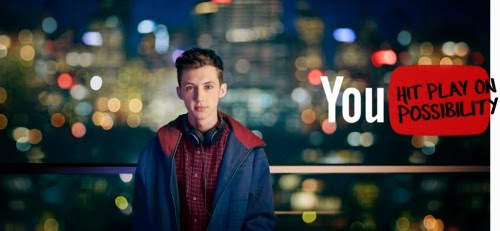
YouTube Wants You to Hit Play on Possibility

I’ve spoken about YouTube on this blog in the past, but from the perspective of the people creating content, those managing it, as well as the brands that are involved in leveraging the reach and likability of talent on this platform. Having already discussed all these elements, I thought it was time to actually look at the YouTube brand itself, and discuss where the world’s second largest search engine seems to be heading.

(Source: Tumblr)

What really got me thinking about the future of YouTube was the almost extravagant advertising campaign that has spanned the streets of Sydney and Melbourne in the past few weeks. The campaign, also known as ‘Hit Play on Possibility’, features Australian Actor, Singer and YouTube star Troye Sivan (as seen above), as well as American Fashion and Beauty Guru, Bethany Mota. As someone who has watched both Troye and Bethany on a tiny screen on my laptop, it was a real shock to see their faces printed all over public transport in Sydney, on big billboards at Central Station, as well as on the banner ads of my Internet Browser.

Considering that this is possibly one of the most ‘mainstream’ advertising efforts by YouTube to date, I couldn’t help but wonder what prompted the campaign, and why it had hit the streets of Australia in such a big way. This campaign also shortly followed a similar one in the UK, where YouTube had commissioned TV adverts for British YouTube talent Zoella (Zoe Sugg), the Slo Mo Guys and Vice News. However, after reading an article about Facebook’s upcoming video strategy, it suddenly dawned on me as to why YouTube may have been giving its best talent a promotional push.  

As most Facebook users would have observed by now, the video function on the social media site has been slowly evolving; videos automatically play as you scroll past, and you can also track views on videos uploaded to the site. These advancements naturally pose a threat to YouTube in that there is growing opportunity for users to create content exclusively on Facebook, as opposed to YouTube. However, where YouTube remains ahead in the game, is in its extensive monetisation program, through which content creators can generate advertising revenue with each unique video view (something Facebook has yet to develop).

So in the context of YouTube’s recent advertising efforts in Australia and abroad, it makes great sense that the social media platform is putting a greater focus on fostering and promoting it’s own talent. In doing so, not only can they ensure that people like Troye and Bethany stay loyal to YouTube, but it also serves the purpose of positioning the video-sharing platform as the founder of this talent, and also the only place you can go and watch them.

As excited as I am about this campaign, I hope really hope that it isn’t a one off, and that YouTube continue to support the people that have made it a genuinely entertaining place to be. For more insight into the campaign, see Troye Sivan’s promotional video for Google Australia below:


Salil Kumar
Current student in the Master of Marketing program at the University of Sydney Business School